Credo Technology Versus Marvell: Weighing High-Growth Specialization Against Infrastructure Scale
As artificial intelligence spending reshapes the data center landscape, everyday investors are weighing the explosive 165% revenue growth of Credo Technology Group against the established infrastructure scale of Marvell Technology.
 🧠AI Analysis
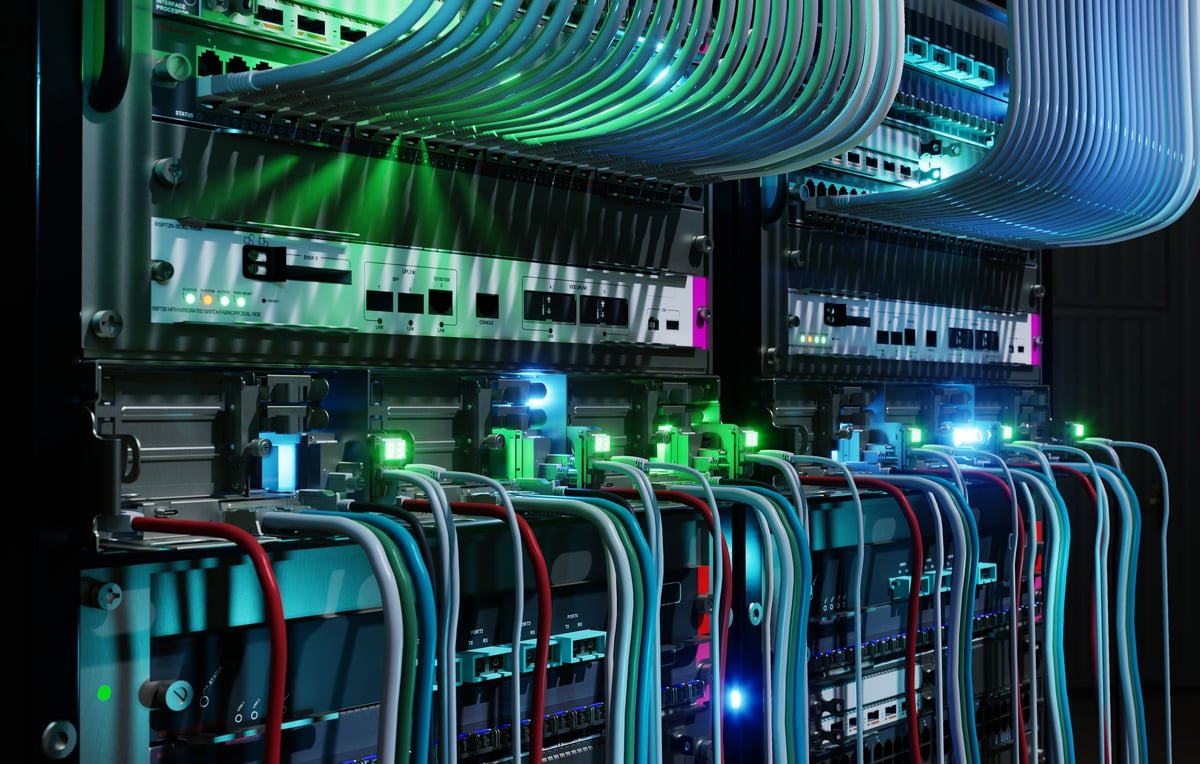
Photo: Motley Fool
Key points
- Credo revenue surged 165.1% to roughly $1.6 billion with a 33.8% net margin.
- Marvell posted nearly $9.5 billion in revenue, growing 30.6% with a 27.9% net margin.
- Both semiconductor firms face high customer concentration, with top clients accounting for over 80% of revenue.
The booming demand for artificial intelligence infrastructure has placed the spotlight on semiconductor developers enabling high-speed data movement. Market participants are increasingly comparing Credo Technology Group, a specialist in energy-efficient connectivity, with Marvell Technology, a broader foundational hardware provider serving cloud, enterprise, and automotive markets.
Credo reported revenue reaching roughly $1.6 billion for the 12 months ending August 1, 2026, marking an explosive expansion of 165.1% compared to the prior period. The firm posted a net income of approximately $538.3 million, yielding a strong net margin of 33.8%. Its balance sheet shows a debt-to-equity ratio of 0.0x and a current ratio of 10.2x, alongside free cash flow of about $407.0 million for the fiscal year ending May 2, 2026. However, customer concentration remains notable, with roughly 90% of annual revenue derived from its top 10 customers, including key partnerships with Microsoft and Oracle.
In contrast, Marvell Technology offers a more diversified operational footprint across storage, optical, and computing solutions. Marvell generated nearly $9.5 billion in revenue for the 12 months ending August 1, 2026, representing a steady growth rate of 30.6%. The company recorded a net income of nearly $2.6 billion with a 27.9% net margin. Marvell maintains a debt-to-equity ratio of 0.3x, a current ratio of 2.0x, and generated roughly $1.4 billion in free cash flow, while its top 10 customers accounted for approximately 82% of its revenue.
Both companies navigate customer concentration risks and fierce competition, with Credo relying on purchase orders from major hyperscalers and Marvell managing complex enterprise integrations and custom chip trends among large tech firms.
What to watch next: Investors should monitor upcoming quarterly reports for customer diversification progress, capital expenditure trends among major cloud providers, and the handling of stock-based compensation proportions relative to operating cash flow.
Source Motley Fool — fool.com/coverage/better-buy/2026/11/14/credo-technology-group-vs-m… ↗
Read next
 🧠AI Analysis
Evaluating HF Sinclair and the Turning Oil Refining Cycle
HF Sinclair has experienced impressive expansion driven largely by its refining sector, but market observers suggest the cyclical peak may be near.
 🧠AI Analysis
Bitcoin Technical Outlook Signals Persistent Bearish Structure Despite Short-Term Bounce
Bitcoin remains constrained by a broader bearish pattern on short-term charts as dynamic trendline resistance caps recovery attempts. Although price recently rebounded fr…
 🧠AI Analysis
Mapping Out a $500 Stake in Two Emerging Quantum Computing Enterprises
A breakdown of a $500 allocation into Infleqtion and Xanadu reveals the high-risk, high-reward nature of early-stage quantum computing investments.
 🧠AI Analysis
Bitcoin Eyes Resistance Near $61,800 Following Support Bounce
Bitcoin displays bullish momentum after rebounding from a key support zone, with potential movement toward the 61,800 resistance level.
 🧠AI Analysis
Analyst Suggests Taking Profits on Global X MSCI Colombia ETF
Market analysts recommend locking in gains on Colombian equities amid current macroeconomic conditions.
 🧠AI Analysis
Anthropic IPO Momentum Fades as Stock Slips Below Opening Levels
Anthropic shares declined following a strong market debut, prompting market watchers to evaluate potential short-term downside risks.