Navigating Market Volatility: Three Basic Options Strategies Explained for Retail Portfolios
As high artificial intelligence spending drives S&P 500 swings, everyday investors are looking at options contracts to manage risk and trim oversized positions.
 💼Investing
Photo: Motley Fool
Key points
- Options contracts can help everyday investors manage portfolio swings driven by heavy AI sector spending.
- Selling cash-secured puts allows investors to get paid upfront while waiting to buy preferred stocks at a discount.
- Buying put options serves as insurance against sharp market drops, though the upfront premium adds an ongoing cost.
Understanding Options in a Jumpy Market
Market swings driven by heavy corporate spending on artificial intelligence have left many retail portfolios vulnerable this fall, prompting a closer look at options contracts. While options often intimidate everyday investors due to complex jargon, financial educators emphasize that these financial instruments essentially function as tools to maintain cash discipline and control concentrated stock holdings.
Three Common Approaches for Everyday Portfolios
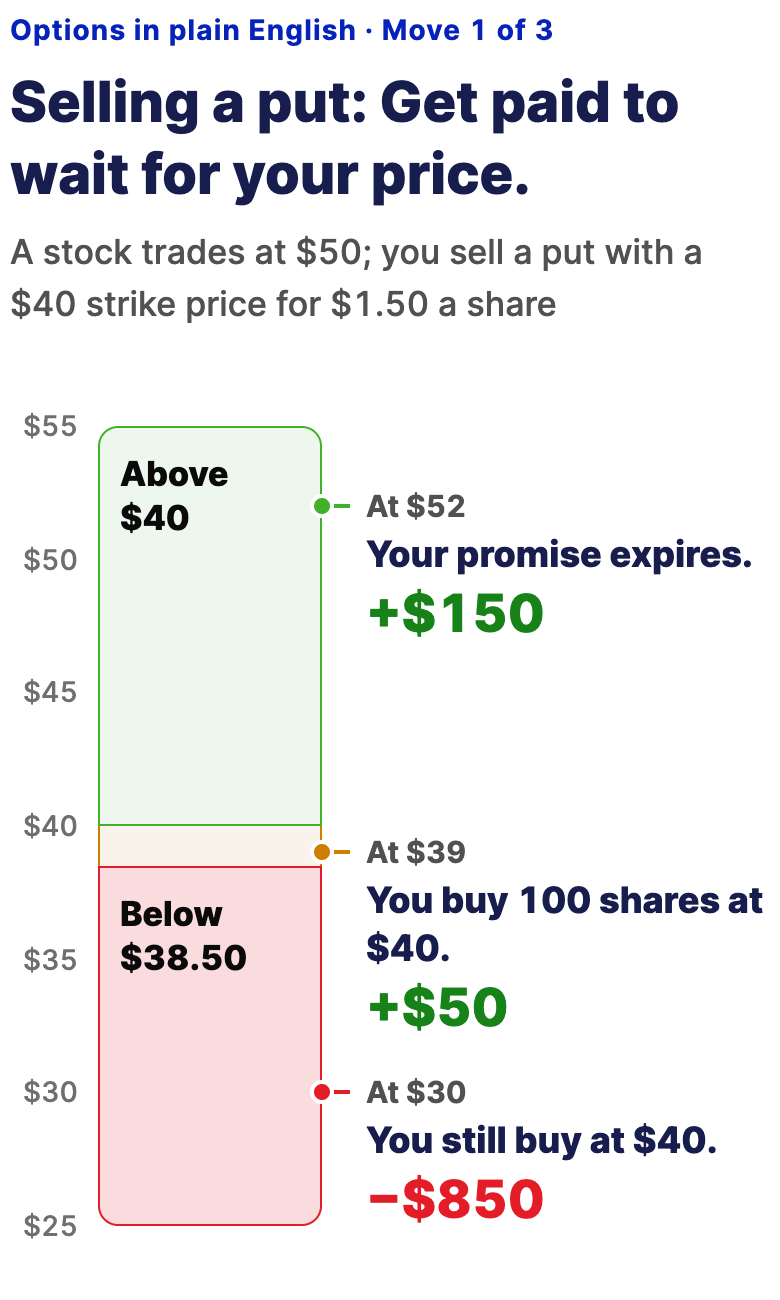
- Selling Puts to Buy Discounted Shares: Investors willing to acquire a specific stock at a lower price can sell a put option, collecting an upfront premium while setting aside cash. If the stock falls below the strike price, the investor buys the shares at the agreed level, with the premium lowering the overall cost basis.
- Selling Calls to Trim Oversized Holdings: When a single stock grows too large for a comfortable portfolio allocation, selling a call option allows investors to generate income while establishing a predetermined exit price for excess shares.
- Buying Puts for Downside Protection: To guard against steep market drops, investors can purchase a put option that secures the right to sell shares at a set strike price, effectively capping potential losses during downturns in exchange for an upfront fee.
Before entering any options trade, market experts advise verifying comfort with the potential outcomes, such as actually having to buy or sell the underlying shares. Because option prices typically climb during periods of heightened market volatility, timing and strategy selection remain critical for retail participants.
Source Motley Fool — fool.com/investing/breakfast-news/2026/11/14/breakfast-news/?source… ↗
Read next
 🧠AI Analysis
Gold Tests Critical Support Zone as Technical Analysts Eye Potential Bullish Reversal
Gold prices are trading near 3,883, testing a crucial support floor between 3,878 and 3,851 as market watchers monitor for a potential recovery.
 🧠AI Analysis
Northeast Community Bancorp Posts Fourth Straight Quarter of Missed Expectations
Northeast Community Bancorp shares faced renewed scrutiny after reporting third-quarter results that fell short of Wall Street forecasts on revenue and earnings.
 🧠AI Analysis
Unlocking Hidden Value: Examining SNDL's US Asset Strategy
An evaluation of SNDL highlights the potential financial impact hidden within the company's various US-based investments.
 🧠AI Analysis
Gold Faces Downward Pressure as Strong Inflation Data Strengthens the Dollar
Gold prices remain under pressure due to hotter-than-expected inflation reports and a stronger US dollar, though ongoing geopolitical risks provide some underlying suppor…
 🧠AI Analysis
Nuclear SMR Developer X-Energy Goes Public at $23 per Share
Rockville-based nuclear power company X-Energy made its public market debut following an initial public offering priced at $23 per share.
 🧠AI Analysis
Accelevation Reaffirms 2026 Guidance in First Earnings Call Following Public Debut
Accelevation Holdings reported revenue and backlog expansion in its third-quarter 2026 results, its first financial update since going public. The infrastructure supplier…