Democratic Lawmakers Debate Restoring Congressional Control Over U.S. Tariffs
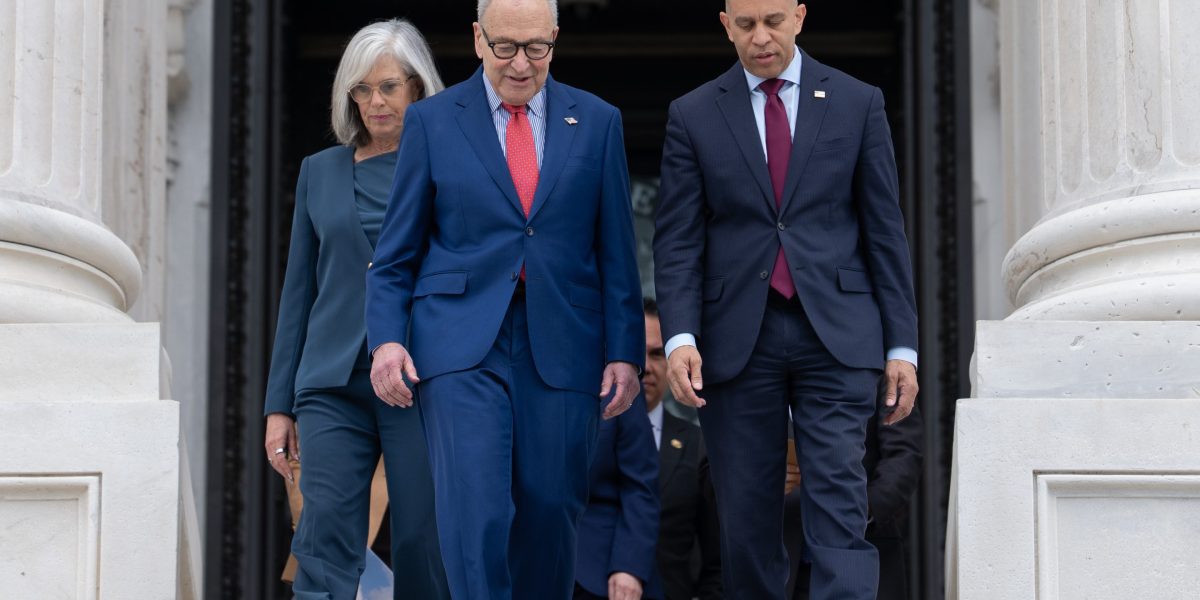
Following recent legislative victories, Democratic lawmakers are weighing how to reclaim tariff authority from the executive branch, amid debates over the effectiveness of unilateral trade policies.
 🌍World Business
Photo: Fortune
Key points
- Democrats debate reclaiming congressional tariff authority from the executive branch.
- Both Trump and Biden administrations bypassed traditional legislative trade mechanisms.
- Unilateral tariffs have driven up consumer prices without effectively securing foreign labor reforms.
Democratic legislators are currently discussing whether to reassert congressional authority over trade tariffs and policy following recent electoral gains in Congress. While some members aim to roll back broad tariffs previously imposed on allies like Canada, others contemplate preserving presidential tariff powers for future administrations to advance progressive objectives such as labor standards. Legal and trade experts argue that this internal debate overlooks broader structural issues, specifically the history of unilateral trade actions by both the Trump and Biden administrations that ultimately failed to protect domestic manufacturing or improve foreign labor practices.
The Limitations of Unilateral Trade Leverage
Historically, Congress shared oversight of trade negotiations through mechanisms like Trade Promotion Authority, linking congressional votes to specific negotiation objectives encompassing environmental and labor standards. However, recent administrations largely bypassed these legislative checks. The Trump administration utilized the mechanism solely for the United States-Mexico-Canada Agreement, while the Biden administration allowed the authority to lapse, pivoting instead toward domestic production incentives and older tariff statutes.
- Unilateral tariffs have contributed to higher consumer prices and strained relationships with international allies. Foreign partners often bypass U.S. market pressure by seeking economic and financial support from alternative global powers like China.
- Despite targeted trade policies, U.S. manufacturing job growth has struggled to outpace broader inflation pressures, with manufacturing production worker wages rising 6.6 percent between January 2025 and October 2026 compared to a 5.8 percent inflation rate.
Experts note that trade pressure alone has proven insufficient in altering domestic policies abroad. For instance, attempts to leverage trade benefits against labor rights violations in countries like Cambodia often faltered as nations turned to alternative financial backers. Furthermore, rushed bilateral trade agreements, such as the 2025 Agreement on Reciprocal Trade between the U.S. and Cambodia, established labor commitments that international monitors found were not effectively met, highlighting the need for more rigorous, deliberative domestic consultation before finalizing international accords.
Source Fortune — fortune.com/2026/11/13/democrats-congress-trade-promotion-authority-tar… ↗
Read next
 📈Markets
Wise Shares Rally 8.5% Following Strong First-Half Results and $141 Billion in Payments
Wise Group saw its stock jump 8.55% to $11.87 after reporting a 23% rise in net revenue to $1.453 billion, driven by robust cross-border transaction volumes.
 💼Investing
Central Puerto Reports 70% Jump in Adjusted EBITDA as Fuel Strategy Pays Off
Argentine energy producer Central Puerto posted a 70% year-over-year increase in third-quarter adjusted EBITDA to $185.3 million, driven by direct fuel procurement and st…
 💼Investing
Turning 62 in 2027? Three Social Security Rules to Keep in Mind
Workers reaching age 62 in 2027 face critical Social Security timing rules that impact their retirement income, monthly check delivery schedules, and earnings limits.
 🧠AI Analysis
RCI Hospitality Faces Legal Overhangs Despite Steady Cash Flow
Shares of RCI Hospitality have climbed 23% since January, yet ongoing legal challenges and core business hurdles suggest investors should wait for a pullback before buyin…
 🧠AI Analysis
Closed-End Fund Strategies Amid October 2026 Tech Volatility
The Nasdaq Composite experienced a sharp pullback at the close of October 2026, driven by rising turbulence in technology and artificial intelligence equities.
 💳Personal Finance
Why Delaying Your First Required Minimum Distribution Can Trigger a Tax Trap
Retirement savers who delay their initial required minimum distribution risk compressing two mandatory withdrawals into a single calendar year, potentially triggering ste…